

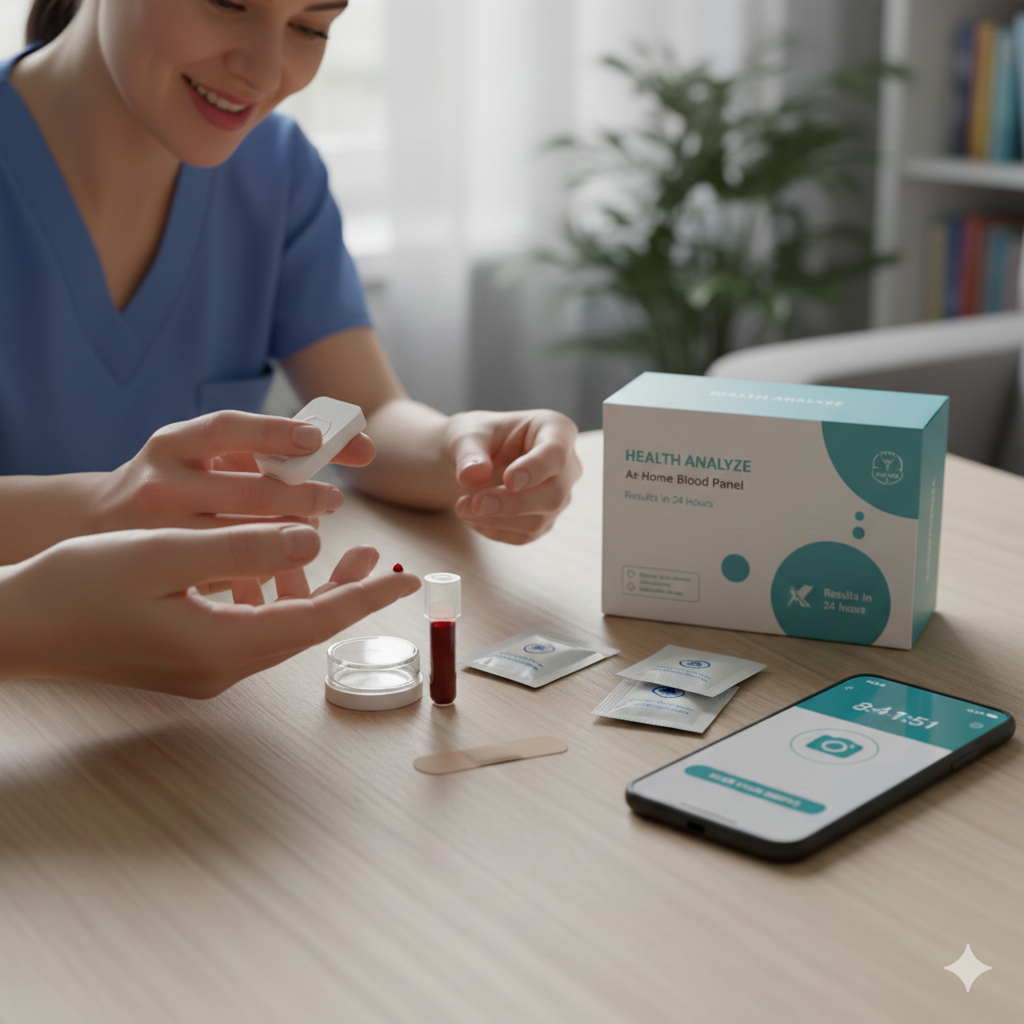
Home Blood Test vs Clinic in Montreal: Which Is Right for You?
Montreal patients who receive a medical requisition for blood work can often choose between visiting a public or private collection centre and arranging a private blood test at home. Both options can provide professional sample collection, but they differ in cost, convenience, scheduling and the level of assistance available.
A clinic or public collection centre may be the best choice when a nearby appointment is available, the patient can travel comfortably and minimizing out-of-pocket cost is the priority. Home blood collection may be more practical for a senior, a person with reduced mobility, someone recovering from surgery or a patient who needs recurring tests without repeated travel.
This guide compares a home blood test versus clinic collection in Montreal so you can discuss the options with your healthcare professional and choose the setting that fits your medical needs, schedule and budget.
Home Blood Test vs Clinic: Quick Comparison
| Consideration | Private blood test at home | Public or private clinic collection |
|---|---|---|
| Travel | The professional comes to the approved location | The patient travels to the collection centre |
| Waiting room | Not required | May be required before collection |
| Scheduling | May include early-morning, evening or weekend options, depending on the provider | Depends on the centre’s appointment availability and hours |
| Cost | Private collection and laboratory fees may apply | Eligible public collection may be covered by RAMQ; private-clinic fees may apply |
| Insurance | Some eligible expenses may be reimbursed depending on the private policy | Coverage depends on whether the service is public or private and on the insurance policy |
| Mobility | Helpful for people who find travelling difficult | Appropriate when the patient can attend the facility safely |
| Collection environment | Home, workplace, senior residence or approved care setting | Dedicated clinical collection environment |
| Test availability | Depends on home-collection and transport requirements | Some specialized procedures may be better suited to a clinical site |
| Medical requisition | Required for most diagnostic laboratory tests | Required for most diagnostic laboratory tests |
Neither option is automatically better for every patient. The right choice depends on the tests ordered and the patient’s circumstances.
What Is a Home Blood Test?
A home blood test involves a qualified healthcare professional visiting the patient to collect samples ordered on a valid medical requisition. The appointment may take place at a residence, workplace, senior residence or another location approved by the provider.
The visiting professional verifies the patient’s identity and requisition, prepares the required collection tubes, performs the blood draw and arranges for the samples to be transported to a laboratory. The laboratory—not the visiting nurse—analyzes the samples. Results are normally sent to the prescribing physician or other authorized healthcare professional according to the laboratory’s process.
Home collection does not mean using a mail-order self-test kit or interpreting results without professional guidance. In this article, “home blood test” refers to professional specimen collection performed at the patient’s location.
A+ Solutions provides home blood test services in Montreal through nurses and licensed practical nurses who are members of the OIIQ or OIIAQ. Samples are coordinated for processing through CDL Laboratories.
What Happens at a Blood-Test Clinic?
Clinic-based collection takes place at a hospital, CLSC, local point of service or private collection centre. Patients generally book an appointment, travel to the facility, check in and wait until a professional is available to perform the collection.
The Government of Quebec identifies blood, stool and urine sample collection among the services available at local points of service and directs patients to Clic Santé to find and book appointments. Availability, operating hours, booking assistance and services vary by facility.
At the appointment, patients may need to bring:
- A valid medical requisition
- Their Quebec health insurance card when using an eligible public service
- Identification or information requested by the facility
- Any preparation information related to fasting or timed testing
Some Montreal collection centres operate only on weekdays or within limited daytime hours. Others may offer broader availability. Check the selected centre’s current instructions before travelling.
Advantages of Having a Blood Test at Home
No Travel, Parking or Transportation Arrangements
The most direct benefit of home collection is avoiding the trip to a collection centre. This can be valuable in Montreal when the patient would otherwise need to coordinate a caregiver, adapted transportation, parking or time away from work.
A Familiar and Private Environment
Some people feel more comfortable receiving blood collection at home. A familiar environment may be particularly helpful for patients who experience anxiety around clinics or who need additional time and reassurance during the appointment.
Support for Seniors and People With Reduced Mobility
Home collection can reduce physical demands for seniors, patients using mobility aids and people recovering after surgery or hospitalization. It also allows collection to take place in a senior residence or care facility when the provider confirms the location and service requirements.
Flexible Scheduling
Private home providers may offer appointment times outside the operating hours of some public collection centres. Availability varies, but early-morning collection can be useful when fasting is required, while evening or weekend options may suit work and family schedules.
Convenience for Recurring Blood Work
Patients who require blood tests repeatedly may find it difficult to arrange transportation and attend a clinic each time. Home collection can simplify the process when the prescribed tests are suitable for mobile collection.
Advantages of Visiting a Clinic or Collection Centre
Publicly Covered Options
Eligible collection through Quebec’s public healthcare system may be covered by RAMQ, making it the most affordable option for many patients. Clic Santé allows users to search for public blood-test appointments using their postal code.
Dedicated Clinical Facilities
Collection centres are designed for specimen collection and may have equipment, staff or processing arrangements that are not available during a home visit.
Access to Certain Specialized Procedures
Some tests require timed collections, observation, multiple samples, special equipment or other procedures that may be better performed at a designated facility. For example, an oral glucose tolerance test can require the patient to remain on site and follow specific instructions.
Convenient When the Centre Is Nearby
Clinic collection may be simple when a patient lives near a service point, can travel independently and finds a suitable appointment time. In that situation, paying for private home collection may not provide enough additional benefit.
Possible Limitations of a Home Blood Test
Home collection is convenient, but patients should also consider its limitations:
- Private service and laboratory fees may apply.
- RAMQ generally does not cover a privately selected home service.
- Private-insurance reimbursement depends on the patient’s policy.
- Not every test or specimen can be collected safely at home.
- Availability may depend on location, appointment time and travel distance.
- The provider must review the requisition before confirming the service and price.
- Urgent symptoms require appropriate medical assessment, not a routine blood-draw appointment.
Ask for a complete quote before booking and contact your insurer directly if reimbursement is important to your decision.
Possible Limitations of Clinic Collection
The experience varies by facility, but possible considerations include:
- Travel time, traffic and parking
- Arranging transportation or caregiver assistance
- Appointment availability at the preferred location
- Limited operating hours at some centres
- Waiting before the collection
- Difficulty using online booking systems
- Physical demands for patients with pain, fatigue or limited mobility
These factors do not make clinic collection inappropriate. They simply help explain why some patients choose a private home alternative.
Which Option Is Better for Seniors?
The safest and most practical option depends on the senior’s mobility, medical condition, support network and the type of blood work ordered.
A clinic may be appropriate when the senior:
- Can travel safely and comfortably
- Has access to transportation or family assistance
- Obtains a suitable nearby appointment
- Needs a procedure that must be completed at a clinical facility
- Wants to use an eligible publicly covered service
Home collection may be preferable when the senior:
- Has reduced mobility or a high risk of falling
- Becomes fatigued during travel
- Is recovering from surgery or hospitalization
- Lives in a senior residence or receives home care
- Requires recurring blood work
- Needs a caregiver to miss work or arrange transportation for every appointment
- Feels significant anxiety in unfamiliar clinical environments
Family members should not assume that age alone makes home collection necessary. Consider the senior’s preferences and ask the prescribing professional whether the required tests are suitable for collection at home.
Which Option Is Better for Busy Professionals and Families?
For someone who can attend a nearby centre before work or during a convenient appointment window, clinic collection may be straightforward and economical.
Home collection can provide additional flexibility when:
- Taking time away from work is difficult
- A parent is coordinating care for several family members
- Travel and parking would take considerably longer than the collection itself
- An early-morning fasting appointment is preferred
- The patient requires repeated testing
The decision is often a comparison between out-of-pocket cost and the time, travel and coordination saved by a home visit.
Cost and Insurance: What Montreal Patients Should Know
Public collection services may be covered by RAMQ when the patient is eligible and uses an appropriate public facility. Private clinics and private home providers charge fees that vary according to the tests, collection method and provider.
For home appointments, the total may include:
- A collection or nursing fee
- A travel or mobile-service fee
- Laboratory-analysis fees
- Additional charges associated with specialized handling, when applicable
A+ Solutions’ mobile collection fee starts at $35. The total cost depends on the tests listed on the requisition and is confirmed after the document has been reviewed.
Some private or group insurance plans reimburse eligible nursing, collection or laboratory expenses. Coverage is not guaranteed and may be subject to deductibles, limits or other conditions. Ask your insurer what services and documentation are eligible before confirming the appointment.
For a detailed explanation of the private process, read How to Book a Private Blood Test in Montreal.
How to Choose Between Home and Clinic Collection
Ask yourself the following questions:
- Is the prescribed test suitable for home collection?
- Is an appropriate public or clinic appointment available nearby?
- Can the patient travel safely and comfortably?
- Will someone need to arrange transportation or take time away from work?
- Are early-morning, evening or weekend appointments important?
- What is the complete private cost?
- Does the patient’s insurance cover any eligible portion?
- Does the patient prefer a clinical environment or the privacy of home?
- Who will receive and interpret the results?
If you are unsure whether a test can be collected at home, send the requisition to the provider for review before making a decision.
How a Private Home Blood-Test Appointment Works
The process normally includes:
- Send the requisition: The provider reviews the prescribed tests and collection requirements.
- Receive a quote: The collection and laboratory fees are explained before confirmation.
- Select the location and time: The provider confirms the service address and an available appointment.
- Complete the collection: A qualified professional verifies the patient’s identity and performs the blood draw.
- Transport and laboratory processing: The samples are handled and transported according to the applicable requirements.
- Receive professional follow-up: Results are sent to the prescribing physician or authorized healthcare professional for interpretation.
Most diagnostic testing requires a valid medical requisition. A collection provider does not determine which diagnostic tests a patient needs.
Frequently Asked Questions About Home Blood Tests vs Clinics
Is a home blood test more accurate than a clinic blood test?
The collection location does not by itself determine accuracy. Proper preparation, patient identification, sample collection, handling, transportation and laboratory analysis all affect the reliability of results. Both settings should follow appropriate professional and laboratory procedures.
Are home blood tests covered by RAMQ?
Privately arranged home blood collection is generally paid by the patient and is not covered by RAMQ. Eligible collection at a public facility may be covered. Confirm coverage with the provider or applicable public facility.
Do I need a medical requisition for both options?
Most diagnostic blood tests require a valid requisition whether the samples are collected at home or in a clinic. Bring or securely send the complete requisition according to the provider’s instructions.
Can every blood test be collected at home?
No. Whether a test is suitable for home collection depends on preparation, equipment, timing, sample stability, transport and other laboratory requirements. The provider must review the requisition before confirming the appointment.
How long does a home blood-test appointment take?
The blood draw itself is usually brief, but total appointment time depends on the patient, the number of samples and any special collection requirements.
How do I book a public blood-test appointment in Montreal?
The Government of Quebec directs patients to Clic Santé to search for appointments at local points of service. Individual hospitals, CLSCs and collection centres may have additional instructions, so verify the location’s current requirements before attending.
How quickly are results available?
Turnaround time depends on the tests ordered and the laboratory. Many routine results may be available within 24 to 48 hours, while specialized tests can take longer. Ask the provider where the results will be sent and who will review them.
Is home collection suitable for children?
Some providers offer home blood collection for children, but availability can depend on the child’s age, the tests ordered and the professional’s experience. Tell the provider the child’s age and collection history before booking. Certain procedures may need to be completed at a pediatric centre.
Choose the Blood-Collection Option That Fits Your Needs
Clinic collection remains a practical, publicly covered option for many Montreal residents. A private home blood test offers an alternative when travel, mobility, recurring appointments or scheduling makes attending a collection centre difficult.
The most appropriate choice is the one that safely meets the laboratory requirements while fitting the patient’s circumstances and budget.
If you have a valid requisition and want to know whether home collection is available, learn more about home blood tests in Montreal or call A+ Solutions at (514) 999-8009 for a requisition review and personalized quote.
Sources
- Government of Quebec: Local Points of Service
- Clic Santé: Specimens and Blood Tests
- CIUSSS Centre-Sud-de-l’Île-de-Montréal: Blood Tests and Sample Collection
Medical disclaimer: This article provides general information and does not replace advice, diagnosis or treatment from a physician or another qualified healthcare professional. Confirm the appropriate collection location and preparation requirements for your prescribed tests.


